-PORTFOLIO-
STALIN SUNNY
User Experience Designer + Brand Consultant + Modern Applied Psychologist
“The beauty of Design
is in the harmony of emotions.”
ABOUT ME
Hi, I’m Stalin Sunny.
Thank you for visiting. I invite you to browse through my portfolio.
Currently an MSc. Human-Computer Interaction Student at the Newcastle University, UK,
I am a User Experience Designer, Brand Consultant, and Modern Applied Psychologist who thrives on the belief that great design is a deep and empathetic conversation. My work is rooted in a genuine fascination with how the smallest details in our surroundings shape the way we feel, think, and connect. I have dedicated my career to translating that curiosity into digital experiences that do far more than just function because they feel intentional, vibrant, and truly alive.
I craft designs by listening to behaviors and motivations, which allows me to solve problems through a story of genuine empathy. Whether I am conducting UX research or shaping a brand’s digital strategy, my focus remains steadfast on clarity and authenticity. This perspective is fueled by my love for walking and observing nature, as I find constant inspiration in the patterns and quiet details of the world. I also enjoy writing original quotes and exploring life through photography, which are wonderful outlets that allow me to capture meaning and perspective in diverse forms.
My approach is further shaped by the strategic thinking found in chess and the immersive worlds of computer games along with the rhythmic flow of music. I also find great joy in watching and enjoying football. My curiosity extends to exploring new cultures and mythology, and I truly love interacting with people to hear their stories. Each of these interests teaches me something unique about how we connect with one another.
With a background spanning Google UX Design, IT Support, and Applied Psychology, I bridge the gap between technical logic and human emotion. I look forward to collaborating with a creative squad to innovate and deliver user-centered solutions while embracing unity in diversity. I am here to help build brands and products that resonate deeply and leave a meaningful, positive mark on the world. I look forward to connecting and creating meaningful work together.
Personal Statement & Design Philosophy:
As a User Experience Designer, I craft valuable and empathetic designs that foster deep emotional connections while elevating user satisfaction. Inspired by the powerful impact of innovation and art, I blend rigorous research and constant iteration with the principles of applied psychology to create seamless digital experiences.
My journey into UX began with a fascination regarding the ability of design to communicate and solve complex problems. I believe that technology without value is meaningless just as art without emotion lacks true worth. This perspective drives my entire approach to design where creativity, usability, and ethics merge to create impactful experiences. I truly look forward to collaborating with a creative squad to innovate and deliver user-centered solutions while embracing unity in diversity.
8D DESIGN PROCESS:
A journey of a thousand miles begins with a single step...
1. DEFINE
“State the purpose, pure and bright, The heart of design begins in light.”
Establishing the vision and core objective.
2. DISCOVER
“Search the world for clues and signs,Gather stories where meaning aligns.”
Researching context and finding meaning.
3. DREAM
“Choose the path, the forms to try, Ideas take shape, reaching the sky.”
Exploring possibilities and choosing a creative path.
4. DESIGN
“Shape the form with balance and grace, Lines and grids fall into place.”
Applying structure, balance, and visual logic.
5. DEVELOP
“Refine the strokes, adjust the light, Test in shadow, in day, in night.”
Iteration and refinement through rigorous testing.
6. DELIVER
“Share the work, polished and whole, A crafted piece with spirit and soul.”
Presenting a finished, high-fidelity solution.
7. DEBRIEF
“Reflect on the journey, lessons learned, Insights gathered, wisdom earned.”
Post-project reflection and knowledge capture.
8. DESTINE
“Carry the design beyond today, A timeless mark to light the way.”
Ensuring the work has longevity and lasting impact.
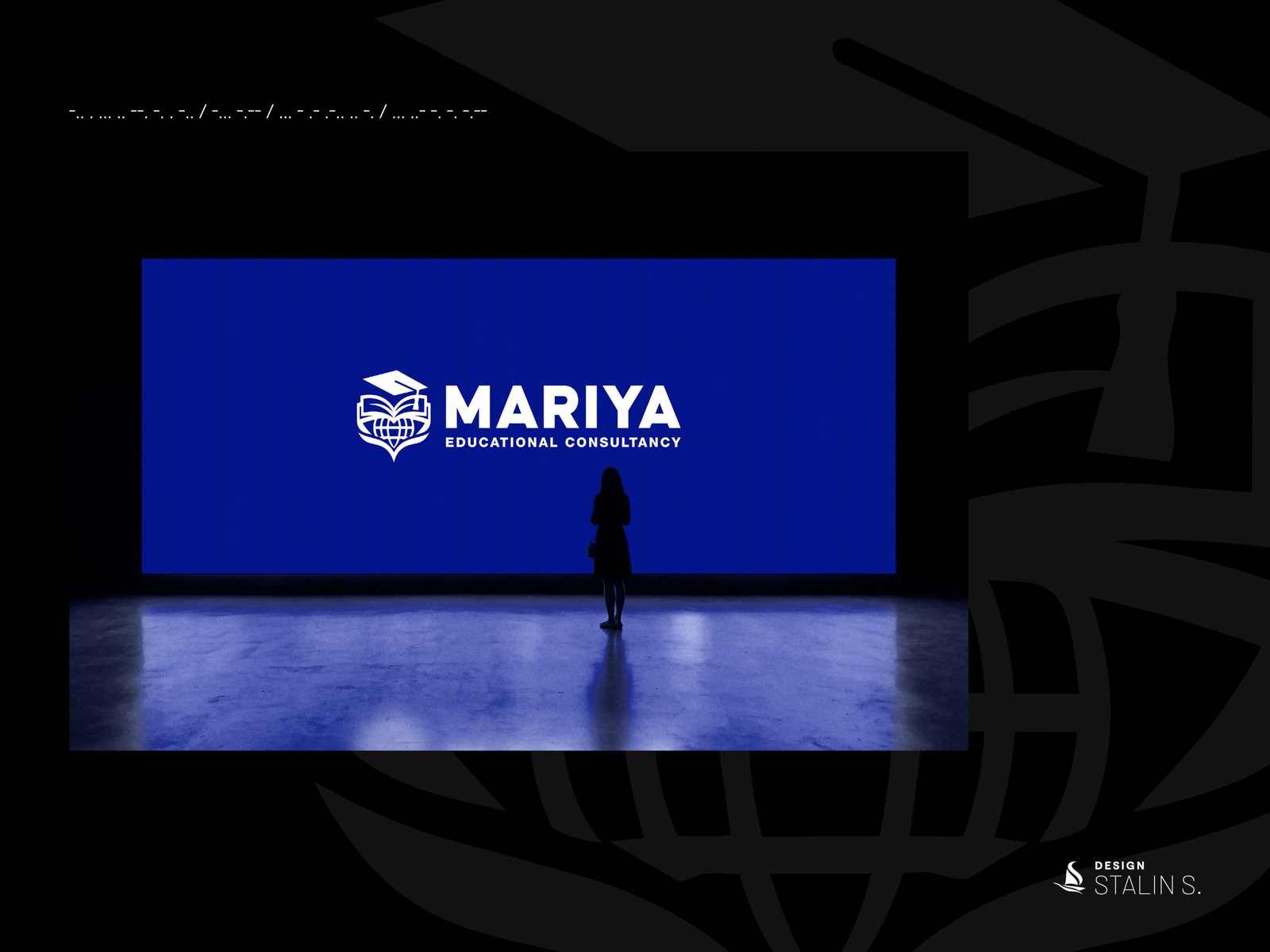
Mariya Educational Consultancy is rooted in South India with a mission to guide students toward the right academic opportunities. By partnering with colleges and universities, it opens access to a wide range of courses and helps learners take confident steps in their educational journey. The brand identity reflects this vision through geometric harmony and institutional consistency, symbolizing growth, trust, and the pursuit of knowledge.
View More